
There’s a moment every operations manager dreads: a mining site, a fleet of trucks, a construction project at full pace, and then the fuel runs out. Not because anyone forgot to order. But the wrong supplier couldn’t deliver on time.
This is exactly why choosing the right diesel fuel distributors matters more than most businesses realise. It’s not just about price per litre. It’s about the entire chain: sourcing, storage, transport, and the relationship that keeps your tanks full when it counts most.
In this article, we’ll walk through how industrial diesel fuel suppliers actually operate, what separates average distributors from genuinely reliable partners, and what you should look for when choosing one, whether you’re running a farm in the Tuli Block, a mine near Jwaneng, or a transport fleet crossing Botswana daily.
What Diesel Fuel Distributors Actually Do (And Why It’s More Complex Than You Think)
Most people think a fuel distributor simply buys diesel and sells it on. That picture is incomplete. A proper fuel distributor manages the entire supply chain, from international procurement to last-mile delivery to your site or depot.
The Full Supply Chain Behind Every Litre
When you receive a tanker of diesel at your facility, that fuel has typically passed through several stages:
- Sourcing and importing – Quality diesel (especially low-sulphur Diesel 50PPM, which is standard for modern equipment) is often sourced from international refining partners. Distributors with global sourcing networks are far better insulated against local supply disruptions or price shocks.
- Quality testing and compliance – Reputable fuel distributors test every batch. For operations running sensitive equipment, such as excavators, generators, and agricultural machinery, fuel quality directly affects engine life and performance. Look for suppliers who are ISO-aligned and carry full quality documentation with each delivery.
- Storage infrastructure – Bulk diesel doesn’t sit in transit. It moves in and out of secure storage facilities that must comply with regulatory standards (in Botswana, that means BERA registration and DEA compliance). These facilities buffer supply, meaning even if international shipments face delays, your orders don’t have to.
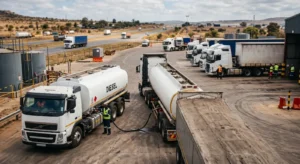
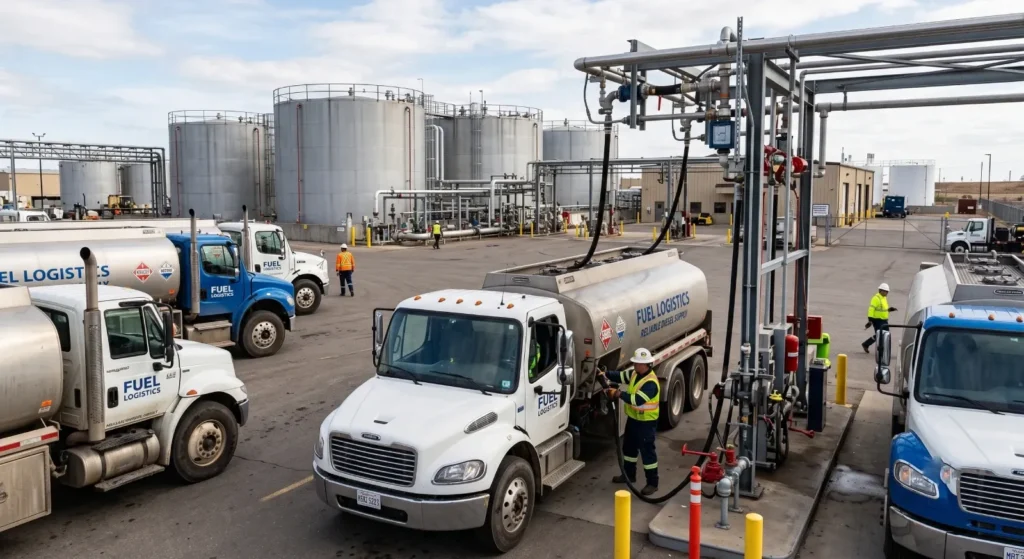
- Logistics and delivery – A certified tanker fleet, route optimisation, and real-time tracking aren’t luxuries. For industrial clients in remote locations, they’re the difference between keeping operations running and costly downtime.
Why Industrial Operations Need Dedicated Fuel Suppliers
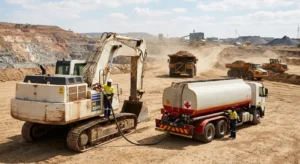
Commercial fuel at a filling station works fine for a car. It does not work for a mining operation consuming tens of thousands of litres a week, a construction firm managing multiple remote sites, or a transport company running a 100-vehicle fleet.
The Scale Factor
Industrial diesel consumption is simply different in nature. You’re not thinking in litres; you’re thinking in kilolitres, supply schedules, and contingency plans. A dedicated industrial diesel fuel distributor structures their entire service model around this reality.
Bulk diesel supply from a specialist distributor typically allows orders starting at 200 litres, scaling to multi-million-litre contracts, all from the same supplier and without renegotiating terms every time your volume grows.
The Price Stability Factor
Wholesale diesel pricing isn’t just cheaper in absolute terms; it provides better planning visibility. Long-term fuel supply contracts with price-locked agreements mean your finance team can build realistic operational budgets without factoring in wild fuel cost swings.
In Botswana, where BERA (Botswana Energy Regulatory Authority) sets pump prices, registered wholesale distributors can often supply at rates below retail pump pricing, sometimes significantly below, especially for high-volume accounts.
The Risk Factor
A single supplier who can’t deliver due to their own logistics failure, supply shortage, or pricing dispute can shut down an entire operation. The best industrial fuel suppliers build redundancy into their sourcing networks. When one supply channel faces disruption, another activates.
Key Services You Should Expect From Quality Fuel Distributors
Not all fuel distributors offer the same range of services. As your operations grow, you’ll likely need more than just tanker deliveries. Here’s what a full-service distributor should be able to offer:
Diesel Import and Global Sourcing
This is the upstream end of the chain. Distributors with their own import licences and verified international partners have far more control over supply continuity and quality than those simply reselling locally bought fuel. If a distributor can’t tell you where their diesel comes from, that’s a concern worth exploring.
Diesel import and sourcing at a professional level means verified global supply partners, rigorous quality assurance, and competitive procurement practices, not just a phone call to a broker.
Fuel Logistics and Transportation
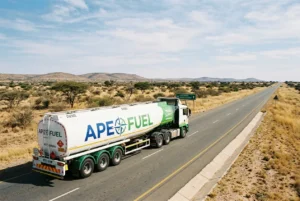
Your distributor’s tanker fleet and logistics operation is the most visible part of the relationship. A certified fleet with route optimisation and real-time delivery tracking means you’re not just told when fuel is coming; you can see it. This matters particularly for remote site operations where fuel delivery windows are tight.
Fuel logistics and transportation should cover both urban and remote delivery. In Botswana, that means capability across the full geographic spread from Gaborone to the Kalahari.
Fuel Storage and Distribution Infrastructure
For large-volume buyers or companies managing their own depot systems, your distributor’s storage infrastructure matters. BERA/DEA-compliant storage with inventory management systems ensures that fuel quality is maintained from delivery to dispatch, and that supply disruptions at one node don’t cascade through the whole chain.
Long-Term Fuel Supply Contracts
Perhaps the most underused tool in an industrial buyer’s toolkit. Fuel supply contracts that lock in pricing, guarantee delivery scheduling, and assign a dedicated account manager give your business a genuine competitive edge. You stop reacting to the fuel market and start planning around it.
What to Look for When Choosing Diesel Fuel Suppliers
There’s no shortage of companies calling themselves fuel distributors. Here’s how to separate genuine capability from a convincing pitch:
Regulatory compliance: Are they registered with the relevant national energy authority? In Botswana, BERA registration is non-negotiable. An ISO-aligned distributor with a clean compliance record is a far safer long-term partner.
Proof of supply continuity: Ask specifically how they handle supply disruptions. Multi-source import networks are a strong signal. A distributor dependent on a single import channel is one crisis away from leaving you short.
Quality documentation: Every delivery should arrive with full quality documentation. If they can’t provide fuel quality certificates, walk away.
Scalability: Can they grow with you? A distributor who serves you well at 5,000 litres a month should be able to handle 500,000 litres a month without changing your account terms.
Industry-specific experience: Mining fuelling requirements differ from agricultural ones. Distributors with genuine experience across sectors, including industrial fuel solutions for heavy equipment and large-site operations, bring a different level of insight to the relationship.
Transparent pricing: Hidden fees and post-delivery invoicing surprises are common in commodity supply chains. Look for distributors with clear, upfront pricing structures and loyalty mechanisms that reward volume.
The Botswana Context: Why Local Expertise Matters for Fuel Distributors
Botswana’s fuel market operates under specific regulatory, geographic, and economic conditions that make local expertise genuinely valuable, not just convenient.
BERA regulates fuel pricing at the retail level, which means wholesale distributors who operate below that rate offer a real cost advantage. The country’s geography, with significant distances between industrial zones and major mining and agricultural operations in areas far from central supply hubs, means logistics capability is as important as price.
Companies like Apex Fuels One, operating from Plot 14400 on the New Lobatse Road in Gaborone, have built their entire model around this reality. BERA-registered, ISO-aligned, and offering Diesel 50PPM with countrywide delivery, they serve mining operations, construction firms, transport fleets, agricultural estates, and government contracts, the core of Botswana’s industrial economy.
Their model, sourcing internationally through verified global partnerships, storing fuel in compliant infrastructure, and delivering via a certified tanker fleet, is what a credible industrial fuel distributor looks like in practice.
Frequently Asked Questions About Diesel Fuel Distributors
What is the minimum order size for industrial diesel fuel distributors?
This varies by supplier, but reputable distributors typically start from 200 litres, scaling to contracts in the millions of litres.
How do diesel fuel suppliers ensure fuel quality?
Through ISO-aligned quality testing, certified storage, and full documentation provided with every delivery.
What is Diesel 50PPM, and why does it matter?
It’s ultra-low-sulphur diesel, the standard for modern equipment. It reduces engine wear and meets emissions compliance requirements.
Are fuel supply contracts better than spot purchasing?
For high-volume industrial users, yes. Contracts offer price stability, priority delivery, and dedicated account support.
How do I know if a fuel distributor is BERA registered?
Ask for their registration number directly and verify with the Botswana Energy Regulatory Authority.
What industries use industrial diesel fuel distributors the most?
Mining, construction, agriculture, transport fleets, government operations, and large-scale manufacturing.
Can fuel distributors deliver to remote sites in Botswana?
The best ones can. Look for distributors with certified tanker fleets and proven remote delivery experience.
How does wholesale diesel pricing compare to pump pricing?
Wholesale pricing from registered distributors is typically lower than retail pump rates, especially for bulk volumes.
What happens if a fuel supplier can’t deliver on schedule?
A quality distributor with multi-source procurement and buffer stock mitigates this risk significantly.
Do fuel distributors handle all the import documentation?
Yes, licensed importers manage customs, quality certifications, and compliance paperwork as part of their service.
The Right Fuel Partner Changes How You Operate
Fuel supply isn’t a cost centre to be managed at arm’s length. For any business where equipment, vehicles, or machinery are central to operations, it’s a strategic input, and it deserves the same attention as any other critical supplier relationship.
The difference between a mediocre fuel distributor and an excellent one shows up in two places: when something goes wrong, and when you need to scale. A distributor with genuine supply chain depth, regulatory compliance, real logistics capability, and a transparent pricing model will keep your operations running in both scenarios.
If you’re operating in Botswana and looking for a diesel fuel supplier that can meet the scale and reliability requirements of industrial or commercial operations, Apex Fuels One offers bulk pricing, countrywide delivery, and supply contracts tailored to your specific needs. Request a quote and get pricing within 24 hours, no obligation.