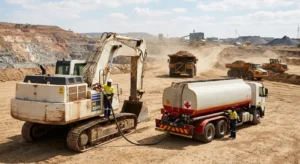

Every time fuel prices in Botswana shift, the ripple effect moves fast. Transport operators revise their rate cards. Construction companies recalculate project margins. Farmers reassess their input costs. Mining operations run the numbers again.
Diesel isn’t just another line item for most businesses in Botswana; it’s the engine behind everything. This makes the way diesel prices are set, and the forces that move them, critically important to understand.
The challenge is that fuel pricing in Botswana feels opaque to most buyers. You see the number at the pump change, but the reasons behind the change are rarely explained clearly. Is it a global oil price movement? A currency shift? A government adjustment? Usually, it’s a combination of all three, and knowing how these pieces connect gives you real leverage in managing your fuel costs.
This guide breaks down exactly how the fuel pricing system in Botswana works, what drives diesel prices up or down, and, most practically, what businesses with significant fuel consumption can do to reduce the impact on their bottom line.
How the Fuel Pricing System in Botswana Actually Works
Botswana does not leave fuel pricing to the open market. Diesel prices, along with petrol and other petroleum products, are regulated by the Botswana Energy Regulatory Authority (BERA), which sets the maximum retail price that consumers pay at the pump.
This regulated pricing model is common across Southern Africa and serves an important purpose: it prevents extreme price volatility at the retail level and ensures that fuel remains accessible across the country, including in areas where distribution costs are higher.
How BERA Sets the Diesel Price
BERA reviews fuel prices periodically, taking into account a range of input factors before publishing any adjustment. The key components that feed into the regulated price include:
- International crude oil prices – Botswana imports all of its petroleum products, which means international oil markets directly influence what fuel costs locally. When Brent crude rises sharply, the input cost of fuel increases accordingly, and BERA’s next review will typically reflect that.
- Exchange rate fluctuations – Because petroleum is priced internationally in US dollars, the Botswana Pula’s exchange rate against the dollar has a direct effect on import costs. A weaker Pula means more Pula per litre of diesel, even if the dollar price of oil hasn’t moved.
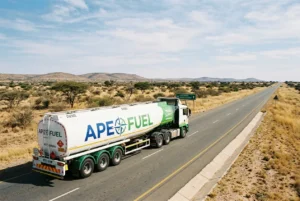
- Freight and import costs – Botswana is landlocked. All petroleum imports travel overland from coastal entry points, adding significant logistics costs to the base price of fuel. Changes in transport costs, fuel for the tankers that bring fuel into the country, road conditions, and border delays all feed into the final price.
- Taxes and levies – Government taxes, road levies, and other statutory charges are built into the pump price. These don’t move as frequently as market-linked factors, but they represent a meaningful portion of the total fuel cost.
- Fuel Fund and strategic reserve margins – Botswana maintains mechanisms to buffer against extreme price swings and to fund strategic petroleum reserves. Contributions to these funds are factored into the regulated price.
The result is a pump price that reflects a complex blend of international market conditions, currency movements, local logistics costs, and statutory obligations updated on a schedule set by BERA.
What Drives Diesel Prices Up? The Key Factors Explained
Understanding what moves diesel prices in Botswana isn’t just academically interesting. It’s operationally useful. When you can anticipate upward pressure on fuel costs even roughly, you can plan procurement, adjust budgets, and make smarter contracting decisions.
Global Oil Market Movements
The single biggest driver of diesel prices in Botswana is the international oil market, specifically the price of Brent crude, which is the global benchmark most relevant to African markets.
Oil prices respond to a wide range of signals: OPEC production decisions, geopolitical tensions in oil-producing regions, global demand shifts, and macroeconomic conditions in major economies. When any of these factors tighten supply or spike demand, crude prices rise, and Botswana’s diesel price eventually follows.
The lag between a global oil price movement and a corresponding BERA price adjustment means businesses sometimes experience a period of misalignment. But over time, the direction of travel correlates closely.
The Pula-Dollar Exchange Rate
This is a factor that doesn’t always get the attention it deserves. Because petroleum is traded globally in US dollars, the value of the Pula relative to the dollar directly affects what Botswana pays for imported fuel.
When the Pula weakens against the dollar, which can happen due to trade balance shifts, investor sentiment, or broader emerging market currency movements, the cost of every litre of diesel imported into the country increases in Pula terms, even if the oil price itself hasn’t moved.
For businesses managing fuel budgets over a quarter or a year, this currency dimension is worth tracking. Sustained Pula weakness can exert upward pressure on fuel costs independent of global oil market conditions.
Botswana’s Landlocked Geography
Geography is a structural cost driver that never goes away. Every litre of diesel sold in Botswana has travelled overland from a coastal refinery or distribution terminal, most commonly from South Africa or through Mozambique and Zimbabwe. That distance represents real cost: fuel consumed in transport, vehicle wear, border crossing delays, and logistics overheads.
This structural cost means that diesel prices in Botswana will always carry a logistics premium relative to coastal markets. It also means that businesses in the north and west of the country, further from distribution hubs, face proportionally higher delivery costs than those closer to Gaborone or Lobatse.
Seasonal and Demand-Driven Pressures
Demand patterns across Southern Africa affect fuel availability and pricing. Agricultural seasons drive higher diesel consumption in farming communities. Construction activity peaks during drier months. Mining operations run year-round, but with consumption spikes tied to production cycles.
When regional demand surges simultaneously, particularly if there are supply-side constraints at the same time, availability tightens, and logistics costs can rise. These periods highlight why businesses with high fuel dependency benefit from supply arrangements that guarantee access rather than relying on spot purchasing when everyone else is competing for the same supply.
How Wholesale Diesel Pricing Differs from the Pump Price
The BERA-regulated pump price is a retail ceiling, the maximum that consumers pay at a service station. It is not the price that businesses purchasing diesel in bulk are required to pay.
Wholesale diesel pricing in Botswana operates below the BERA pump rate. Licensed diesel importers and wholesalers who source fuel directly from international markets can offer pricing that reflects their procurement economics, which, at sufficient volume, is meaningfully lower than the retail rate.
Why Wholesale Is Almost Always Better for Business Buyers
The economics are straightforward. A diesel wholesaler importing directly and selling at volume has lower per-litre costs than a retail station, which carries overheads, franchise obligations, and retail margins built into its pricing. Those savings pass through to wholesale buyers.
For businesses consuming thousands of litres per month or millions per year, the difference between pump pricing and wholesale pricing represents a significant recurring saving. Even a few thebe per litre, compounded across high volumes, adds up to a meaningful budget impact over a financial year.
Below-BERA Pricing: What to Look For
When evaluating wholesale diesel suppliers in Botswana, always compare their quoted price against the current BERA pump rate. A legitimate, licensed wholesaler with direct import capability should be pricing below the regulated pump price, particularly at volume.
Suppliers pricing at or above the pump rate, unless there is a clear delivery surcharge justification, are not offering genuine wholesale value. This is worth testing explicitly in any supplier conversation.
Practical Ways Businesses Can Reduce Their Fuel Costs in Botswana
Understanding what drives fuel prices in Botswana is useful context. What most businesses actually want to know is what they can do about it. Here are the most effective levers available to high-consumption fuel buyers.
1. Move to Bulk Purchasing
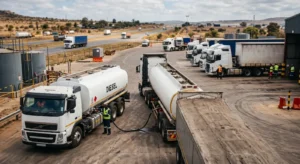
The most direct route to lower per-litre diesel costs is buying in larger volumes. Most licensed diesel wholesalers in Botswana offer tiered pricing; the higher the volume per order, the lower the unit price. If your current approach involves multiple smaller purchases at retail or near-retail prices, consolidating those into fewer, larger wholesale orders will typically generate immediate savings.
This requires thinking about on-site storage capacity. If your facility or site can hold a larger buffer volume, you reduce both the frequency of orders and the per-litre cost of each one.
2. Negotiate a Long-Term Supply Contract
A formal fuel supply contract with a licensed diesel wholesaler does several things that spot purchasing cannot. It locks in pricing terms or, at a minimum, sets clear parameters for how prices adjust, which gives you budget certainty. It secures your supply priority, which matters during periods of high demand when spot buyers may face availability constraints. And it often comes with loyalty benefits, such as per-litre rebates that accumulate meaningfully at scale.
For any business consuming diesel consistently and predictably, a supply contract is one of the highest-value procurement decisions available.
3. Plan Around BERA Price Reviews
BERA’s price reviews are periodic and relatively predictable in their timing, even if the direction of adjustment isn’t. Businesses that track international oil prices and Pula-dollar exchange rates can develop a reasonable sense of whether an upward or downward adjustment is likely at the next review.
If upward pressure is building, oil prices rising, Pula weakening, and you have the storage capacity, purchasing ahead of a price increase can deliver meaningful savings. This requires some market awareness, but it’s a strategy that experienced fuel buyers use routinely.
4. Reduce Fuel Waste in Operations
Not all fuel cost management is procurement-focused. Operational efficiency improvements can reduce the volume of diesel consumed without affecting output.
Fleet operators benefit from route optimisation, which reduces unnecessary mileage. Equipment operators see savings from regular engine maintenance, which keeps fuel efficiency at spec. Generator-dependent sites can invest in load management to reduce running hours. These operational measures compound over time, and unlike procurement strategies, they’re not affected by price movements at all.
5. Consolidate Suppliers and Simplify Your Supply Chain
Managing multiple fuel suppliers across different sites creates complexity, inconsistency, and lost negotiating leverage. A single, capable bulk fuel supplier who can serve all your locations with centralised invoicing, consistent quality, and a single account relationship is almost always more cost-effective than a fragmented supplier arrangement.
Consolidation also makes contract negotiation more straightforward, because you’re bringing the supplier a larger, more predictable volume commitment in exchange for better terms.
Reading the Market: How to Anticipate Diesel Price Movements
You don’t need to be a commodities trader to develop a working sense of which direction diesel prices in Botswana are likely to move. Monitoring a small number of indicators gives you enough visibility to make smarter procurement decisions.
Indicators Worth Watching
Brent crude oil price – Freely available through financial news services. When Brent is trending upward over several weeks, an eventual upstream effect on Botswana’s diesel price is likely, subject to the BERA review cycle.
USD/BWP exchange rate – The Pula-dollar rate is published daily by the Bank of Botswana. Sustained weakening of the Pula is an indicator of upward pressure on import-linked fuel costs.
BERA announcements – BERA publishes price adjustment notices when they occur. Subscribing to or regularly checking these announcements gives you early visibility on retail price changes and context for how your wholesale pricing may be affected.
Regional fuel supply news – Supply disruptions in South Africa, Mozambique, or Zimbabwe, all key transit and source markets, can create short-term availability constraints that affect Botswana’s supply. Keeping a general awareness of regional developments is worthwhile for high-consumption buyers.
FAQ: Fuel Prices in Botswana
Who sets fuel prices in Botswana?
Fuel prices in Botswana are regulated by the Botswana Energy Regulatory Authority (BERA). BERA sets the maximum retail pump price for diesel and other petroleum products, reviewing and adjusting prices periodically based on international market conditions, exchange rates, import costs, and statutory levies.
How often do diesel prices change in Botswana?
BERA reviews fuel prices periodically; the frequency varies, but adjustments typically reflect sustained shifts in international oil prices or significant exchange rate movements. Prices do not change daily as they do in some deregulated markets, but they are not fixed indefinitely either.
Why is diesel more expensive in some parts of Botswana?
The regulated pump price sets a national ceiling, but delivery costs vary by location. Areas further from major distribution hubs, particularly in the north and west of the country, face higher logistics costs, which can be reflected in effective delivered prices, especially for wholesale or bulk supply.
Can businesses buy diesel cheaper than the pump price?
Yes. Licensed diesel wholesalers who import directly can offer pricing below the BERA-regulated retail pump price, particularly for bulk orders. The savings increase with volume and are most significant for businesses with consistent, high-volume fuel consumption.
What is Diesel 50PPM and is it the standard in Botswana?
Diesel 50PPM is fuel with a maximum sulphur content of 50 parts per million, aligned with Euro 4 emission standards. It is the prevailing standard across Southern Africa, including Botswana, and is what most modern diesel engines are designed to run on.
Does the international oil price directly affect what businesses pay for diesel in Botswana?
Yes, but with a lag. International crude oil prices feed into BERA’s price review calculations. A sustained rise in global oil prices will typically result in an upward adjustment to Botswana’s regulated diesel price at the next review. The timing depends on BERA’s review schedule and the magnitude of the movement.
How does the Pula exchange rate affect diesel prices?
Because petroleum is priced globally in US dollars, a weaker Pula means higher Pula-denominated import costs, even if the international oil price hasn’t changed. Exchange rate movements are one of several factors BERA considers in price reviews and represent a genuine cost driver for fuel importers.
What is the best way for a business to manage rising fuel costs in Botswana?
The most effective strategies combine procurement optimisation, bulk buying, long-term supply contracts, and wholesale sourcing with operational efficiency measures like route optimisation, regular equipment maintenance, and load management. Businesses that do both are best positioned to manage fuel cost exposure regardless of market movements.
Is it worth signing a long-term fuel supply contract?
For businesses with consistent and predictable diesel consumption, yes, almost always. Supply contracts typically deliver lower per-litre rates, supply priority, and price certainty over the contract period, all of which are valuable when fuel is a major operating cost.
How can I find out the current diesel price in Botswana?
The current regulated pump price is published by BERA and updated when adjustments are made. Licensed diesel wholesalers and suppliers also publish their current wholesale rates, which should be below the BERA pump price, and can provide specific bulk pricing on request.
Conclusion: Knowledge Turns Fuel Costs Into a Manageable Variable
Diesel prices in Botswana will keep moving. International oil markets don’t stand still, exchange rates fluctuate, and the structural costs of supplying a landlocked country don’t disappear. What changes when you understand the fuel pricing system in Botswana is your ability to respond intelligently rather than reactively.
You now know what drives the diesel price in Botswana. You understand how the BERA-regulated pricing system works, what forces push costs up, and why wholesale pricing represents a real opportunity for high-consumption businesses. You also have a practical set of levers- bulk purchasing, supply contracts, operational efficiency, and market monitoring that translate that knowledge into direct cost savings.
The businesses that manage fuel costs most effectively in Botswana don’t leave procurement to chance. They work with licensed, reliable diesel wholesalers under structured agreements that give them price certainty, guaranteed supply, and the kind of partnership that holds up when market conditions get difficult.
Want to see what wholesale diesel pricing looks like for your specific volume and location? Request a bulk quote from a BERA-registered, ISO-certified diesel supplier today; you’ll receive a tailored response within 24 hours, with no obligation.