
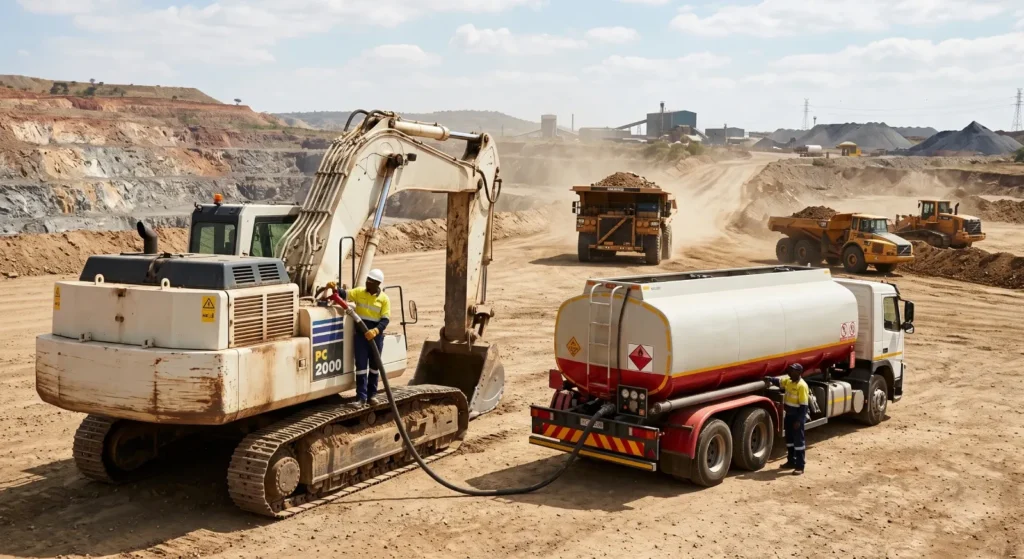
Few industries depend on diesel as heavily as construction and mining. Almost every machine that moves earth, lifts material, drills rock or hauls loads across a site runs on it, and most of them consume it in large quantities over long operating hours. Electrification has made progress in other sectors, but on active sites diesel remains the practical power source for heavy equipment.
That dependence makes diesel supply for construction and mining an operational concern rather than a purchasing formality. When fuel arrives late, the effects are visible within hours: machinery sits idle, work schedules shift, material movement slows, productivity for the day falls short of plan, and operating costs rise even though less work has been completed. On a large site, a single delayed delivery can hold up several crews at once.
This article looks at why diesel matters so much in these industries, what happens when supply is delayed, how construction and mining companies can plan fuel requirements more effectively, and what to look for when selecting a supplier capable of meeting site demands consistently.
Why Is Diesel Supply Important for Construction and Mining?
Fuelling Heavy Equipment and Machinery
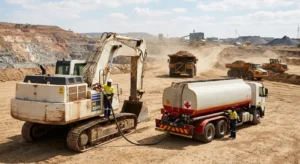
The core equipment on any site runs on diesel. Excavators working trenches and foundations, bulldozers grading and clearing, loaders feeding material into trucks, dump trucks hauling across the site, and drilling equipment preparing blast holes or foundations all draw significant fuel volumes. These machines are selected for their power and endurance, and both come at a fuel cost that has to be planned for.
Supporting Continuous Operations
Construction and mining sites frequently run machinery for extended periods long shifts, multiple shifts, or continuous operation where project deadlines or extraction targets demand it. Adequate diesel availability keeps those cycles unbroken. Where fuel is planned around the shift pattern rather than replenished reactively, sites avoid the stop-start pattern that quietly erodes output over a month.
Keeping Materials and Equipment Moving
Fuel does more than power production equipment. It moves raw materials onto site, carries excavated material and overburden away, brings in construction supplies as work progresses, and relocates equipment between work areas. Material movement is often the constraint that determines site pace, and it stops as soon as the vehicles doing it run short of fuel.
The Importance of Timely Fuel Supply at Construction Sites
Understanding the importance of timely fuel supply is easier when you examine what happens in its absence.
Preventing Equipment Downtime
Machinery without fuel is simply parked. An idle excavator continues to accrue rental or ownership costs, its operator remains on the payroll, and the work it was scheduled to complete moves to another day. Because heavy equipment is expensive per hour, downtime caused by something as avoidable as an empty tank is among the most frustrating losses a site manager faces.
Maintaining Project Schedules
Construction programmes are sequenced excavation before foundations, foundations before structure. A fuel delay that halts one activity can push back everything scheduled behind it. Fuel availability therefore sits directly on the critical path more often than most planners account for.
Supporting Multiple Pieces of Equipment
Large sites rarely need fuel for one machine. They need it for several, simultaneously, each with different consumption rates and refuelling intervals. Planning supply according to actual equipment deployment and operating hours rather than a flat monthly figure gives a far more accurate picture of what the site will consume.
Reducing Operational Disruptions
Timely delivery removes an entire category of disruption from the daily routine. Supervisors spend less time rearranging tasks around fuel constraints and more time managing the work itself.
Why Diesel Supply Is Critical for Mining Operations
Powering Mining Equipment
Mining equipment operates at a scale that magnifies every fuel consideration. Large excavators, haul trucks, drills and support machinery consume diesel in volumes that require dedicated storage and structured replenishment. Running these operations on ad-hoc purchasing is rarely viable.
Supporting Material Extraction and Transportation
Diesel powers each stage of the material cycle: extraction equipment breaking and removing ore or overburden, loading equipment filling haul trucks, hauling fleets moving material to processing or stockpile areas, and material handling equipment managing it once it arrives. These stages are interdependent, so a fuel shortage at any point affects the whole chain.
Supporting Remote Mining Sites
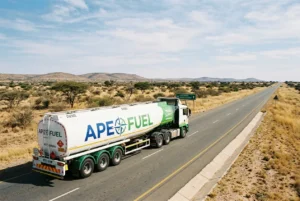
Mining operations are often located well away from conventional fuel stations, sometimes on roads that are difficult in poor weather. Fuel logistics become a genuine planning exercise under these conditions delivery lead times are longer, contingency stock matters more, and a supplier’s ability to reach the site reliably becomes as important as the fuel price.
Maintaining Continuous Mining Activities
Because mining stages run in sequence, fuel shortages rarely stay contained. Extraction slows, haulage backs up, processing runs below capacity, and recovering the lost output takes considerably longer than the shortage itself lasted.
How Delayed Diesel Supply Can Affect Construction and Mining
Equipment Downtime
Machines remain unused while waiting for fuel, generating cost without output. On sites where equipment is hired, this is paid downtime.
Project Delays
Delayed machinery operation affects planned tasks, and those tasks affect the ones scheduled after them. What began as a delivery delay can become a programme variance discussed at the next progress meeting.
Increased Operating Costs
The costs compound quickly: idle labour still being paid, equipment downtime still being charged, rescheduling that pulls crews and plant out of sequence, and emergency fuel procurement typically at short notice and at less favourable terms than planned supply.
Lower Productivity
When fuel is rationed or unavailable for part of a shift, the site completes less work within the same scheduled operating hours. Productivity measured per machine-hour falls even though the hours themselves were paid for.
Disruption to Material Movement
Trucks and machinery responsible for moving material are usually among the highest fuel consumers on site, which makes them the first affected. When they stop, stockpiles build up in the wrong places and downstream activities lose their supply.
What Should Construction Companies Consider When Planning Diesel Supply?
Effective diesel supply for construction begins with planning rather than procurement.
Estimate Equipment Fuel Requirements
Build the estimate from the ground up: how many machines are deployed, how many hours each runs, what type of equipment it is, and how long the project will last. This gives a working baseline that can be checked against actual consumption.
Plan for Peak Fuel Demand
Fuel requirements rise during intensive phases bulk excavation, major earthworks, or periods when the programme is being accelerated. Planning only for average consumption leaves the site exposed exactly when it can least afford it.
Consider Site Location
Remote or difficult-to-access sites need additional delivery planning, longer lead times and, often, greater on-site storage capacity to absorb delivery variability.
Maintain Appropriate Fuel Storage
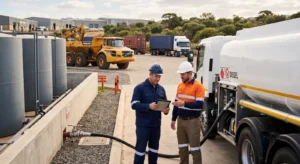
Sufficient on-site storage provides a buffer between deliveries. Storage should be sized to the site’s consumption and set up in line with applicable safety and regulatory requirements for fuel handling.
Establish a Reliable Delivery Schedule
Scheduled deliveries, agreed in advance and reviewed as the project progresses, substantially reduce the risk of running out. They also make consumption easier to track over time.
How Diesel Suppliers Support Construction Projects
Capable diesel suppliers for construction do more than deliver fuel they support the way a project actually runs.
Regular Diesel Deliveries
A recurring delivery arrangement keeps ongoing project requirements met without repeated urgent ordering, and gives the site a predictable rhythm to plan around.
Bulk Fuel Supply
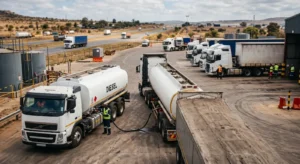
Projects with high consumption benefit from bulk delivery directly to site storage. Fewer, larger deliveries reduce coordination effort and generally suit high-volume operations better than frequent small drops.
Flexible Supply Planning
Supply can be planned around the project schedule, machinery usage patterns and specific site requirements including access constraints, working hours and phase-by-phase demand changes.
Supporting Remote Construction Locations
Delivery capability matters most where standard fuel infrastructure is absent. Suppliers with suitable tanker capacity and route experience make remote projects considerably easier to run.
Consistent Fuel Availability
The cumulative effect of dependable supplier support is fewer fuel-related interruptions and a site that spends its scheduled hours working.
How to Choose the Right Diesel Supplier for Construction and Mining
Check Supply Reliability
Establish whether the supplier can consistently meet required volumes over the duration of the project, not just for the first few deliveries.
Evaluate Delivery Capability
Review delivery schedules, the locations the supplier serves and how quickly they can respond when requirements change unexpectedly.
Check Fuel Quality
Consistent fuel quality matters for heavy equipment, where contaminated or off-specification diesel can lead to injector, filter and pump problems that surface later as maintenance costs and unplanned downtime.
Review Supply Capacity
Confirm the supplier can support both normal running and periods of increased demand during intensive project phases.
Compare Overall Costs
Assess fuel pricing alongside delivery-related charges, minimum order quantities and operational requirements rather than comparing the rate per litre in isolation.
Check Safety and Compliance
Fuel transportation, handling and storage should follow applicable safety and regulatory requirements, supported by trained personnel and compliant equipment.
Best Practices for Maintaining a Timely Diesel Supply
A straightforward operational checklist keeps fuel supply under control:
- Track fuel consumption regularly so that estimates are based on real site data rather than assumptions.
- Estimate future fuel requirements against the upcoming programme and equipment deployment.
- Monitor fuel storage levels on a defined schedule instead of checking only when a shortage is suspected.
- Schedule deliveries before critical levels are reached, allowing for lead times and access conditions.
- Account for project expansion or increased equipment usage as soon as it is known, not after consumption rises.
- Maintain communication with the diesel supplier so upcoming changes in demand are anticipated.
- Have a contingency plan for unexpected demand or delivery disruption, particularly on remote sites.
- Review supplier performance regularly, looking at delivery punctuality, volume accuracy and responsiveness.
Frequently Asked Questions About Diesel Supply for Construction and Mining
1. Why is diesel supply important for construction and mining?
Both industries rely on diesel-powered heavy equipment for excavation, loading, hauling and drilling. Without adequate fuel, machinery cannot operate and site activity stops.
2. What is diesel supply for construction and mining?
It refers to the sourcing, delivery and storage of diesel fuel for equipment and vehicles used on construction sites and mining operations, usually through scheduled or bulk deliveries.
3. Why is timely fuel supply important at construction sites?
Late fuel means idle machinery, disrupted schedules and lost productive hours. Timely supply keeps equipment available when the programme requires it.
4. How can delayed diesel deliveries affect construction projects?
They cause equipment downtime, delay dependent activities, increase costs through idle labour and emergency procurement, and reduce the work completed within scheduled hours.
5. How does diesel supply support mining operations?
It powers extraction, loading, hauling and material handling equipment, and is particularly important at remote sites where fuel logistics require advance planning.
6. What equipment in construction typically requires diesel?
Excavators, bulldozers, loaders, dump trucks, drilling equipment, cranes, compactors and most site transport vehicles.
7. How should construction companies plan their diesel supply?
By estimating consumption from equipment numbers, operating hours and project duration, planning for peak phases, factoring in site location and setting a regular delivery schedule.
8. What should businesses look for in diesel suppliers for construction?
Supply reliability, delivery capability to the site location, consistent fuel quality, adequate capacity for peak demand, transparent overall costs and sound safety and compliance practices.
9. Why is fuel storage important at construction and mining sites?
On-site storage provides a buffer between deliveries, supports continuous operation and reduces dependence on frequent replenishment particularly valuable at remote locations.
10. How can companies reduce the risk of diesel shortages?
By monitoring consumption and storage levels, scheduling deliveries in advance, communicating demand changes to the supplier and maintaining a contingency plan.
Keeping Construction and Mining Operations Fuel-Ready
Reliable diesel supply for construction and mining is fundamental to keeping heavy equipment and vehicles operational. Sites that plan fuel properly rather than treating it as a routine reorder tend to lose fewer hours to avoidable stoppages.
Timely supply helps minimise equipment downtime, schedule disruptions, emergency procurement and the unplanned operating costs that follow. Apex Fuels One supports construction and mining operations with dependable diesel supply, helping businesses plan their fuel requirements and maintain continuity across demanding worksites.
When assessing a diesel supplier, businesses should consider supplier reliability, delivery capability, fuel quality, supply capacity and safety practices together rather than selecting on price alone. With sound fuel planning and the right supply partner, construction and mining companies can keep operations moving and spend less time dealing with preventable fuel-related interruptions.