
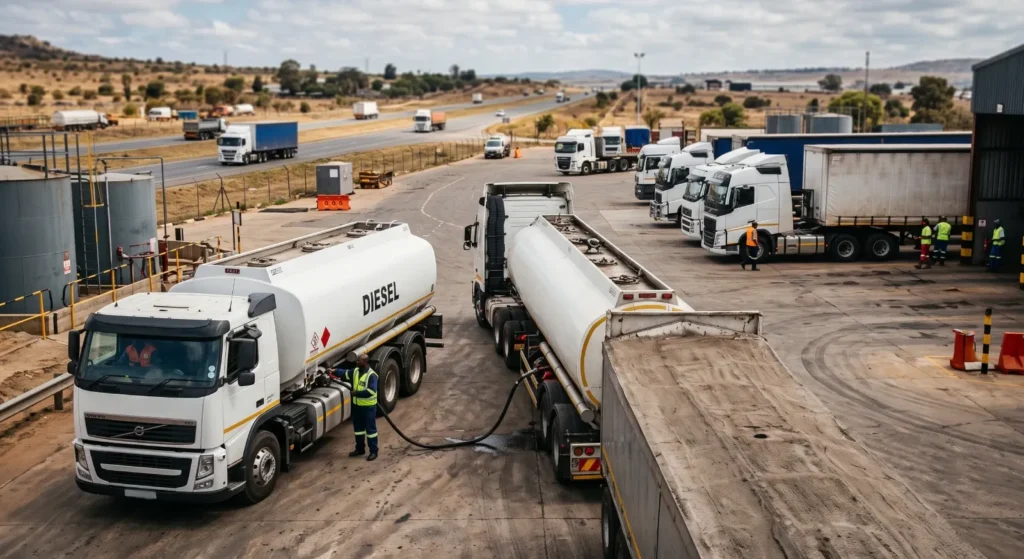
Transport and logistics businesses run on movement, and movement runs on fuel. When diesel is available on time and in the right quantity, vehicles leave the yard on schedule, routes are completed as planned, and customers receive their consignments when promised. When it isn’t, the effects spread quickly: trucks idle, delivery windows slip, drivers wait, and costs rise across the operation.
Fuel availability influences almost every operational metric that matters: fleet movement, delivery schedules, operating costs and vehicle utilisation. A truck that cannot refuel is a fixed cost generating no revenue, and a delayed delivery rarely stays contained to a single route.
This is where diesel suppliers for transport and logistics come in. Their role goes beyond simply selling fuel. Companies operating commercial fleets need dependable delivery, consistent fuel quality, and a supply arrangement that can be planned around. A supplier who can be relied upon week after week becomes part of the operational structure of the business, not just a line item in the procurement file.
What Role Do Diesel Suppliers Play in Transport and Logistics?
Ensuring Continuous Diesel Availability
Commercial fleets operate on tight cycles. Vehicles return, refuel, and go out again, often within the same day. Uninterrupted fuel supply keeps that cycle intact. When shortages occur, or deliveries arrive late, the impact is immediate: vehicles are held back, dispatch schedules are reworked, and in some cases loads have to be redistributed or deferred. Recovering from even a short supply gap can take considerably longer than the gap itself.
Supporting Daily Fleet Operations
Diesel suppliers support a wide range of commercial vehicles: long-haul trucks moving freight between cities, delivery vehicles servicing local routes, commercial transport fleets running scheduled operations, and the logistics networks that connect them. Each has different consumption patterns and refuelling rhythms, and a capable supplier accommodates these differences rather than applying a single delivery template to every customer.
Helping Businesses Plan Fuel Requirements
Regular supply arrangements bring predictability. When deliveries follow a known schedule and volumes are recorded consistently, businesses can estimate consumption more accurately, forecast fuel spend and plan procurement in advance. Over time, this data becomes useful for budgeting, route costing and identifying vehicles or routes with unusual fuel consumption.
Why Transport Companies Need Reliable Diesel Fuel Suppliers
Reducing Fuel-Related Downtime
Downtime caused by fuel shortages is entirely avoidable, which makes it particularly costly. A vehicle waiting for fuel still carries its fixed costs: driver wages, financing, and insurance while contributing nothing to output. Delayed fuel availability can also force last-minute rescheduling that disrupts other, unrelated routes.
Maintaining Delivery Schedules
Delivery commitments depend on vehicles being ready when required. Fuel availability sits directly upstream of that readiness. In sectors where delivery windows are contractual or where onward handling is time-sensitive, a fuel delay can cascade into missed slots, penalty exposure and strained customer relationships.
Supporting Large Transport Fleets
Larger fleets consume diesel in volumes that cannot be sourced casually. As fleet size increases, so does the need for organised, predictable supply, planned deliveries, adequate storage and a supplier with the capacity to meet recurring demand without strain. Ad-hoc purchasing that works for five vehicles rarely works for fifty.
Managing Fuel Requirements Across Operations
Fuel procurement is more effective when it reflects how the business actually operates. Route distances, fleet composition, seasonal peaks and operating schedules all influence consumption. Transport businesses that map these variables can align delivery frequency and volumes with real demand instead of reacting to shortages after they appear.
How Diesel Suppliers Support Logistics Companies
For a diesel supplier for logistics companies, the operating context is different from general commercial supply; the demands are continuous, distributed, and schedule-driven.
Fuel Supply for Distribution Fleets
Distribution vehicles typically operate on repeat routes with predictable daily mileage. Their diesel requirements are steady but constant, and any interruption affects multiple downstream deliveries at once. Suppliers serving distribution fleets need to match that consistency with equally consistent replenishment.
Supporting High-Frequency Operations
Many logistics businesses run vehicles continuously, across shifts, or over several routes in a single day. Refuelling windows in these operations are narrow. Fuel needs to be on site and ready when vehicles return, not scheduled for the following morning.
Scheduled Diesel Deliveries
Planned delivery schedules help logistics companies maintain adequate fuel availability without holding excessive stock or placing repeated urgent orders. A regular delivery pattern, agreed in advance and adjusted as volumes change, keeps on-site storage within a workable range.
Supporting Operational Continuity
Dependable diesel supply contributes to smoother operations overall. Dispatch planning becomes more straightforward, fewer contingency arrangements are needed, and supervisors can focus on load planning and routing rather than chasing fuel.
The Importance of Diesel Suppliers for Transport Fleets
A diesel supplier for transport fleets must be equipped for volume, recurrence, and operational variability.
Meeting High-Volume Fuel Requirements
Commercial transport fleets can consume substantial quantities of diesel every month, and that demand recurs without pause. Suppliers serving this segment need sufficient sourcing capacity, transport resources, and stock availability to meet those volumes consistently rather than intermittently.
Consistent Fuel Availability
The value of a supply arrangement is measured at the point when vehicles need fuel. Availability at that moment, not average availability across the month, is what keeps a fleet operational.
Flexible Supply for Fleet Operations
Fleet demand rarely stays static. Contracts change, seasonal peaks arrive, and additional vehicles are added. Supply arrangements that can be adjusted according to fleet size and operational demand are considerably more useful than rigid fixed-volume agreements.
Fuel Planning for Different Fleet Requirements
Businesses can estimate diesel requirements with reasonable accuracy by considering the number of vehicles in operation, how intensively each is used, typical route distances, and how frequently vehicles run. Together, these give a working consumption baseline that can be refined against actual delivery records.
What Should Businesses Look for in Diesel Fuel Suppliers?
Comparing diesel fuel suppliers on price alone tends to be a short-lived strategy. Several factors deserve equal attention.
Reliable Supply Capacity
The first question is straightforward: can the supplier consistently meet the volumes required, including during peak periods? A supplier stretched at your current volume will struggle as your fleet grows.
Consistent Fuel Quality
Fuel quality affects engine performance, maintenance intervals, and component life across a fleet. Contaminated or off-specification diesel can cause injector and filter problems that appear as unexplained maintenance costs long after the fuel was consumed. Consistency matters as much as the specification itself.
Timely Delivery
Delivery reliability is where supplier claims are genuinely tested. Scheduled deliveries that consistently arrive within agreed windows allow operations teams to plan with confidence; deliveries that vary unpredictably require constant buffer management.
Storage and Delivery Capabilities
Suppliers should be assessed on whether their equipment, tanker capacity and delivery arrangements suit your site. Access constraints, on-site storage capacity and the volumes involved all influence whether a particular supplier is practical for your operation.
Transparent Pricing
Clear pricing covers more than the rate per litre. Delivery charges, minimum order quantities, terms of payment and any additional applicable costs should be understood in advance so that comparisons between suppliers are made on equivalent terms.
Safety and Compliance
Fuel handling, transportation and storage should follow applicable safety and regulatory requirements. Suppliers should be able to demonstrate proper procedures, trained personnel and compliant equipment; this protects your site, your staff and your business.
How to Choose the Right Diesel Supplier for Transport and Logistics
Step 1: Assess Your Fleet’s Diesel Requirements
Begin with your own numbers. Estimate regular monthly consumption and identify peak periods when demand rises above the baseline.
Step 2: Compare Supplier Capacity
Check whether each supplier can comfortably meet both current requirements and the volumes you expect as the fleet expands.
Step 3: Evaluate Delivery Reliability
Review delivery schedules, lead times, and how the supplier responds when requirements change at short notice. References from comparable customers are useful here.
Step 4: Check Fuel Quality Standards
Confirm that supplied fuel meets applicable specifications and ask how quality is maintained through storage and transport.
Step 5: Compare Overall Supply Costs
Look past the quoted fuel price. Delivery charges, storage implications and operational costs, where applicable, all contribute to the real cost of supply.
Step 6: Review Safety and Compliance Practices
Confirm that the supplier follows relevant fuel-handling requirements and maintains appropriate documentation, equipment and training.
Benefits of Working With a Reliable Diesel Supplier
Better Fuel Availability
Vehicles stay fuelled and ready for allocation, which keeps dispatch planning straightforward and utilisation high.
Fewer Operational Interruptions
Dependable supply reduces the risk of fuel-related delays and the disruption that follows when schedules have to be rebuilt mid-day.
Easier Fuel Planning
Predictable deliveries and consistent records support more accurate procurement, inventory planning and budgeting.
Support for Fleet Growth
A suitable supplier can potentially scale supply as fleet requirements increase, avoiding the disruption of changing suppliers during a growth phase.
Improved Operational Efficiency
Better fuel planning contributes to smoother transport and logistics operations overall, freeing management attention for routing, maintenance, and service quality.
Common Diesel Supply Challenges for Transport and Logistics Companies
Even well-run fleets encounter fuel supply difficulties. The most common include unexpected increases in fuel demand during busy periods, delayed deliveries that leave vehicles waiting, inconsistent fuel quality between consignments, and outright supply shortages during regional disruptions. Poor on-site fuel storage can introduce contamination or losses, unexpected price changes complicate budgeting, and inadequate supplier capacity becomes apparent precisely when demand is highest.
Most of these challenges are manageable rather than unavoidable. Careful supplier selection addresses capacity, quality and reliability at the outset. Structured fuel planning based on actual consumption data, route patterns and known seasonal peaks reduces exposure to demand spikes. Maintaining adequate storage and reviewing supplier performance periodically ensures problems are identified before they affect operations.
Frequently Asked Questions About Diesel Suppliers for Transport and Logistics
1. What do diesel suppliers for transport and logistics companies provide?
They supply diesel fuel to commercial fleets, typically with scheduled deliveries, agreed volumes and arrangements suited to the operational patterns of transport and logistics businesses.
2. Why are diesel fuel suppliers important for transport fleets?
Transport fleets depend on continuous fuel availability. A dependable supplier keeps vehicles operational, supports delivery commitments, and reduces the risk of fuel-related downtime.
3. How does a diesel supplier support logistics companies?
Through planned deliveries, sufficient capacity for high-frequency operations, and consistent availability that allows distribution fleets to run without interruption.
4. What should transport companies look for in a diesel supplier?
Supply capacity, fuel quality, delivery reliability, storage and delivery capabilities, transparent pricing, and adherence to applicable safety and compliance requirements.
5. How can businesses ensure a consistent diesel supply?
By establishing regular supply arrangements, maintaining adequate on-site storage where practical, monitoring consumption and working with a supplier whose capacity matches their requirements.
6. Why is diesel fuel quality important for commercial fleets?
Fuel quality affects engine performance, maintenance requirements and component life. Inconsistent or contaminated fuel can lead to avoidable repairs and unplanned downtime.
7. How do diesel suppliers help reduce fleet downtime?
By delivering fuel on schedule and in required volumes, they help ensure vehicles are ready when needed rather than waiting for replenishment.
8. Can diesel suppliers support large transport fleets?
Suppliers with adequate sourcing, storage and delivery capacity can support large fleets, typically through planned bulk deliveries aligned to the fleet’s operating schedule.
9. How should logistics companies plan their diesel requirements?
By reviewing fleet size, vehicle usage, route distances and operating frequency, then comparing estimated consumption against actual delivery records to refine the forecast.
10. What factors should businesses compare when choosing diesel fuel suppliers?
Capacity, delivery reliability, fuel quality standards, total supply cost including delivery, safety and compliance practices, and the ability to adjust supply as requirements change.
Building a More Reliable Fuel Supply for Fleet Operations
Dependable diesel supply is a working part of efficient transport and logistics operations, not a peripheral purchasing decision. Fleets that treat it accordingly tend to experience fewer interruptions and plan with greater confidence.
When evaluating options, businesses should weigh supply reliability, fuel quality, delivery capability, pricing, safety and compliance practices, and the supplier’s ability to meet changing fleet requirements over time.
The practical takeaway is simple: choosing a suitable diesel supplier for transport fleets helps businesses maintain fuel availability, protect delivery commitments and minimise avoidable operational disruptions, and that decision is far easier to make before a shortage forces it.